Gutter Lifespan in Nemo, TX: Signs to Repair or Replace
Check the condition, drainage and mounting of your Nemo gutters before deciding between repair and replacement.
Have a gutter question about your Granbury home?
Call (817) 326-3682The honest answer is that it depends far less on the gutter than most people assume.
Gutter lifespan depends on material, installation quality, maintenance and exposure. Fasteners, pitch, debris load and sizing all influence whether a system continues to drain properly.
So rather than give you a number that would not apply to your house anyway, here is what actually governs gutter lifespan, the signs that yours is near the end, and what a replacement involves — including how long it takes.
What Actually Determines How Long Gutters Last
The Fasteners, Not the Trough
The trough is a piece of aluminum. Left alone it does very little to wear out. What fails is the connection between that trough and the house.
Hangers loosen. Screws work out of the fascia. And once one section drops slightly, the pitch changes, water starts sitting where it should be flowing, and every problem downstream accelerates. Open rural exposure is hard on fasteners and seams over time, which is the single most common reason a system reaches the end of its usable life while the metal itself still looks serviceable.
Standing Water
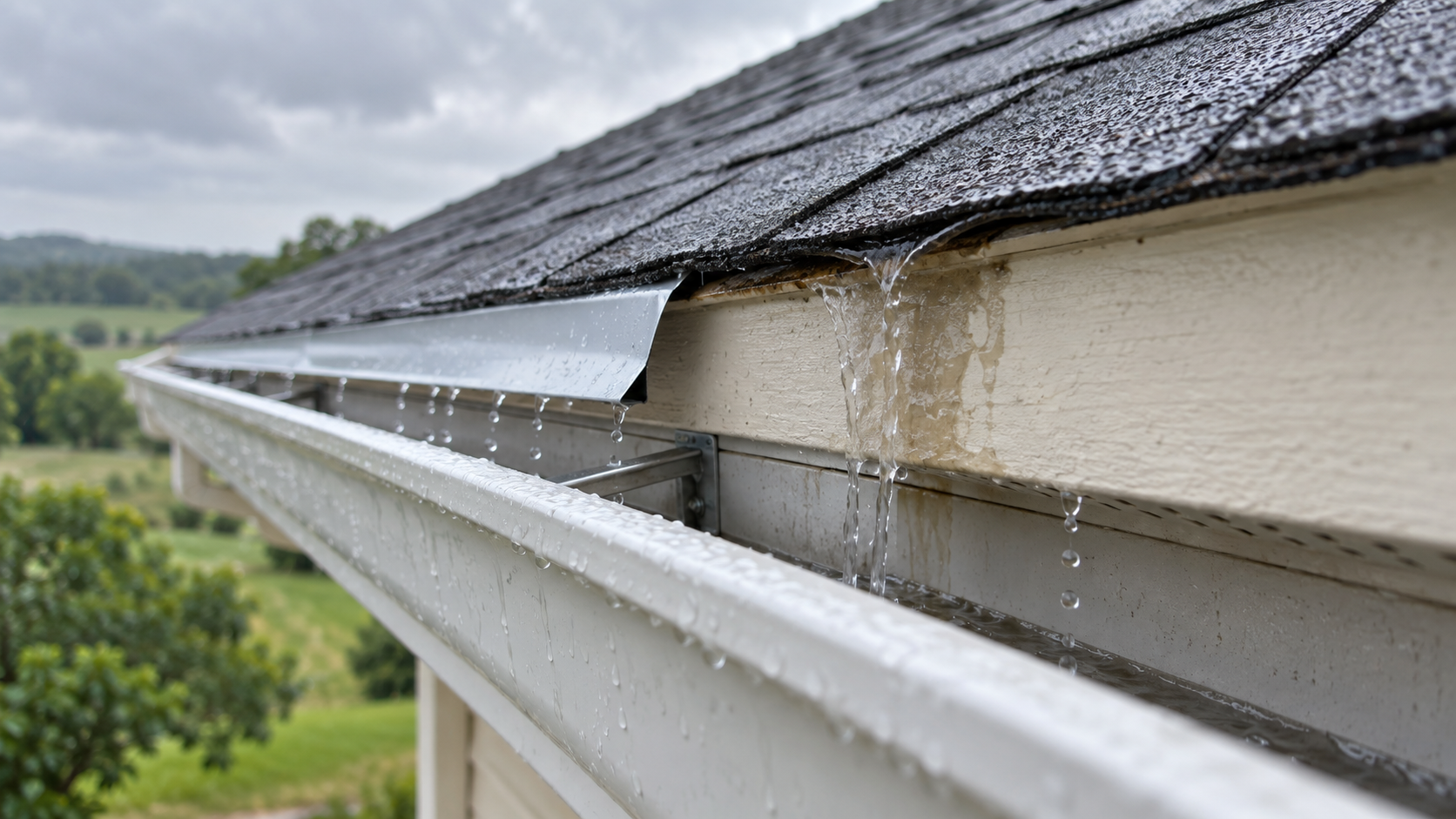
A gutter that drains completely is a dry channel most of the year. A gutter holding a shallow pool is a wet one permanently, and everything about that is worse: faster corrosion at the fasteners, debris that stays damp and heavy instead of drying and blowing out, and added weight pulling on the same hangers that let the water sit in the first place.
Standing water is a pitch problem, and pitch problems are usually fixable. Left unfixed, they are what ends the system.
Seams and Joints
Traditional sectional gutters rely on multiple joints that loosen over time. Every joint is a place that can move, and a place that can move is a place that will eventually leak.
This is the core structural argument for a seamless system: formed from a single continuous piece of aluminum, cut to the exact length of your roofline on-site, it reduces those failure points along the entire run. Fewer seams mean fewer places for water to leak, which means better long-term protection for your fascia, siding, and foundation.
Debris Load
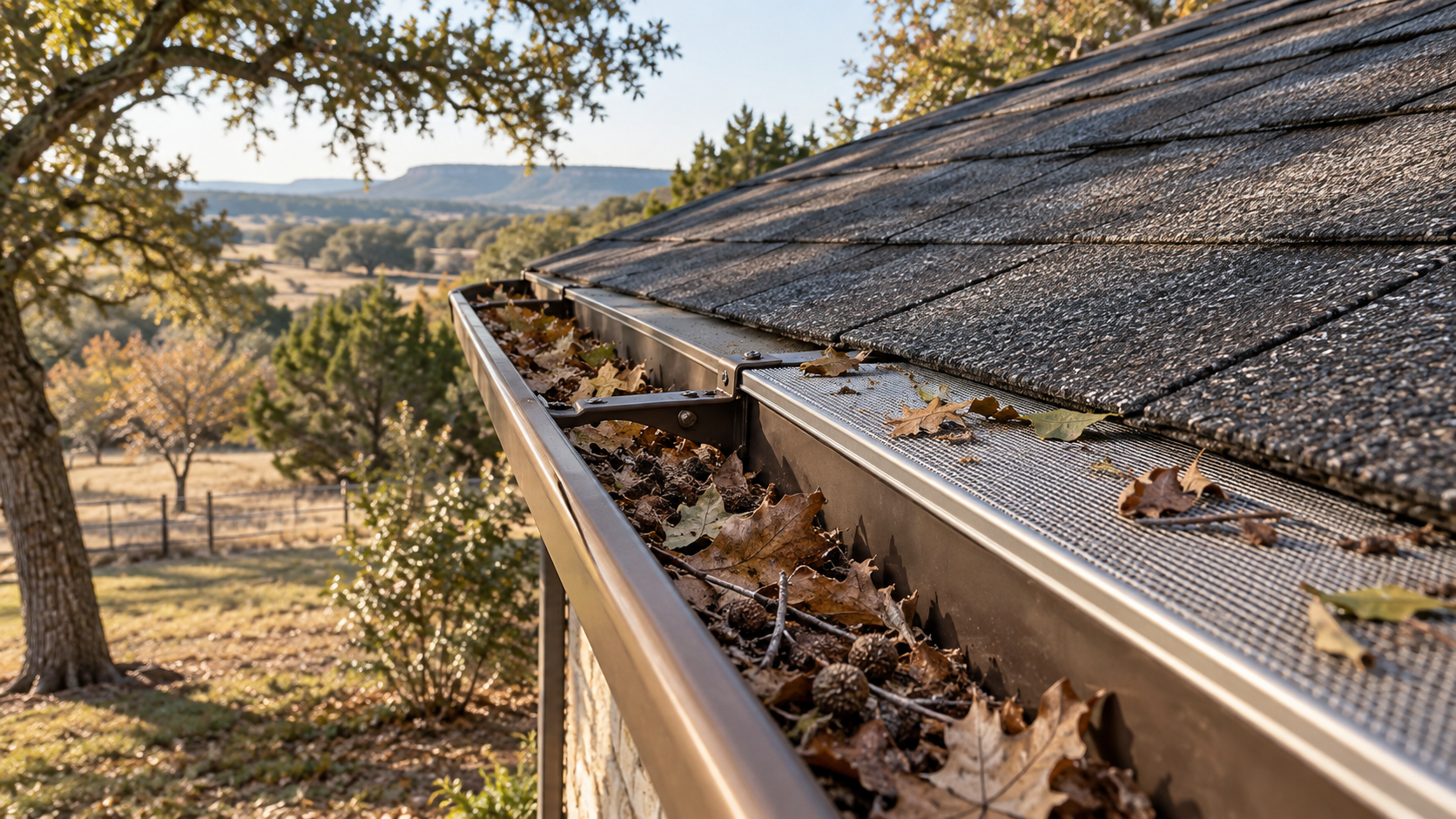
A gutter under heavy canopy that is never cleaned is carrying weight it was not designed to carry, holding moisture against itself year-round, and overflowing regularly. All three shorten its life. A gutter under the same trees that gets cleared on a reasonable interval lasts substantially longer, and nothing about the metal changed.
Whether It Was Sized Right to Begin With
An undersized system overflows every hard rain, which means the fascia behind it gets wet repeatedly and the hangers are fighting standing water and debris constantly. Standard K-style and half-round profiles come in 5-inch and 6-inch sizes, with larger 6-inch runs and oversized downspouts available where roof size or runoff volume calls for it. A system that was matched to the roof is not fighting itself for its whole service life.
The Material
Worth addressing because it is the thing everyone asks about first and it matters least in practice.
Granbury Gutters fabricates seamless aluminum gutters on-site to fit each roofline. Aluminum does not develop iron rust, but steel fasteners and other components can show corrosion. Enamel-coated aluminum is available in different colors, with galvalume steel and architectural copper for specialty projects.
But a well-fastened, correctly pitched, properly sized aluminum system and a poorly fastened one are the same metal with wildly different outcomes. The installation is the variable.
Signs Your Gutters Are Near the End
Most of these are visible from the ground.
- Sections visibly out of line. A run that dips or waves has lost its pitch, and water is pooling somewhere along it.
- Gutters pulling away from the fascia. Either the hangers are failing or the wood behind them is, and neither improves on its own.
- Standing water after the rain stops. Look for the tide line of grit and residue inside the trough. It marks where water sits.
- Rust streaks or rusted-through spots. Rust staining may come from steel fasteners or other components. A professional assessment can distinguish a component repair from deterioration of the gutter itself.
- Seams that leak after being resealed. Sealant is a repair with a service life. A joint that has been sealed more than once is telling you the joint has moved.
- Fascia damage behind the gutter. Soft or rotting wood means the mounting surface is compromised, and rehanging into it will not hold.
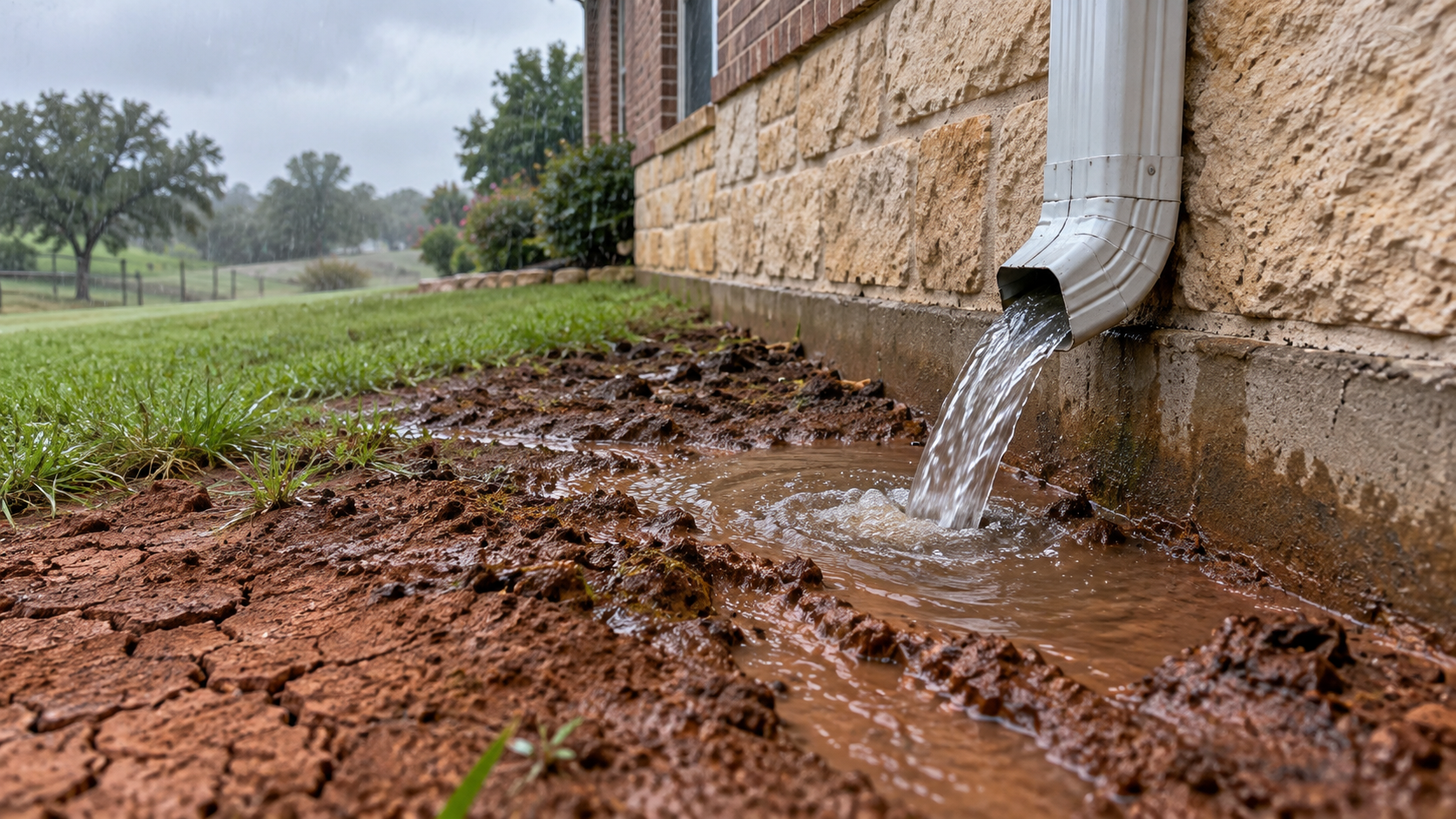
- Overflowing every hard rain despite being clean. That is a sizing or capacity limit, not a maintenance issue, and cleaning will never fix it.
- Visible separation at corners or downspout transitions. Joints that have opened up are joints that have moved.
One of these is a repair. Several at once, across multiple runs, is a system at the end of its service life — and that is the point where gutter replacement costs less than continuing to chase it.
How Gutters Get Made On-Site
Most people have never watched this happen, and it explains why a seamless system behaves differently from what it replaces.
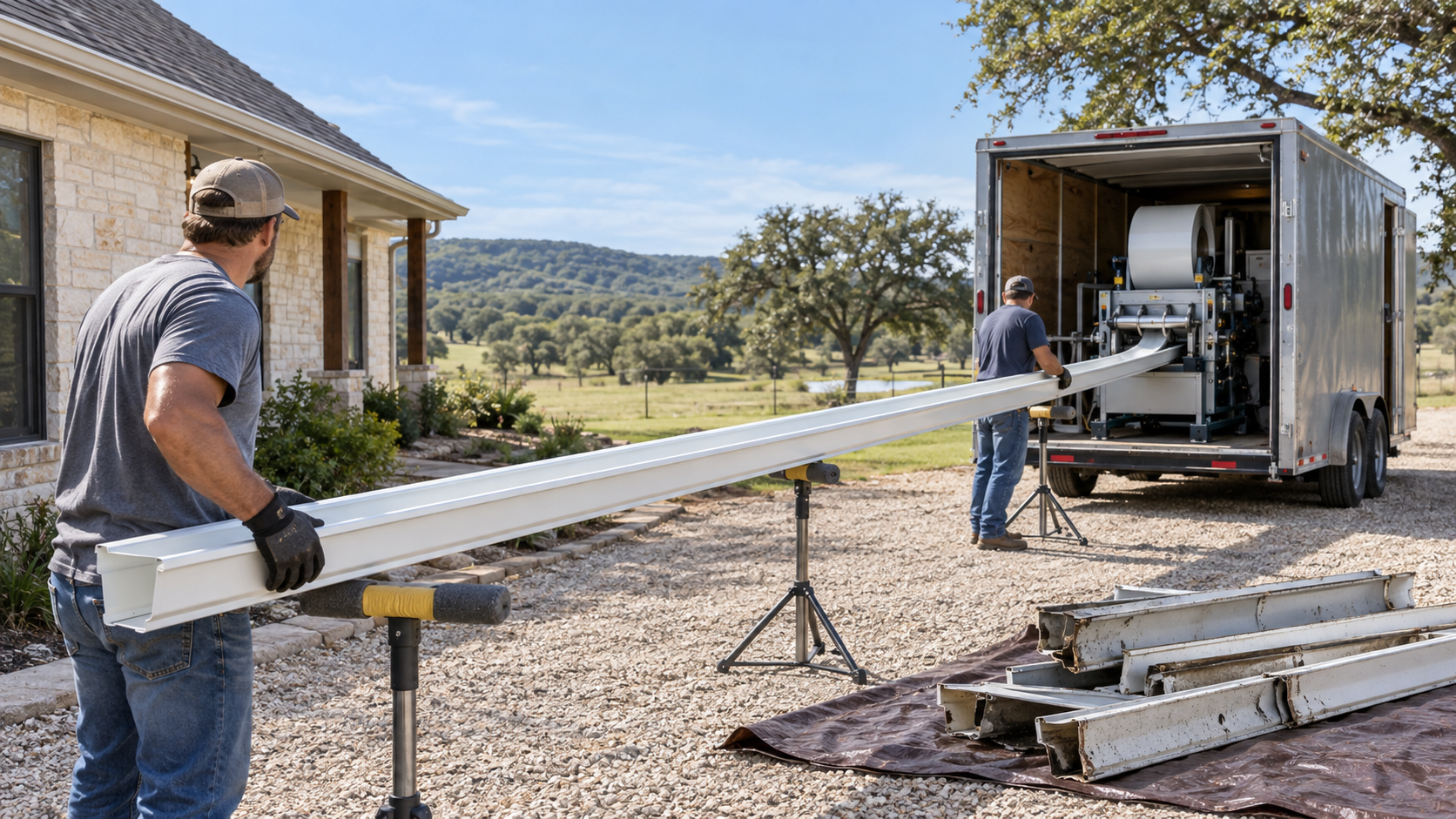
The gutter is not delivered. It is formed at your house, from a coil of aluminum run through forming equipment brought to the site, which produces a continuous length of finished profile in whatever size the run requires. Every run is fabricated to match the home's exact measurements, so corners and downspout transitions fit cleanly instead of relying on stock lengths and extra joints.
The practical consequence is that a sixty-foot run is one sixty-foot piece. Not four sections joined three times. There is no inventory of standard lengths to work around and no reason to add a joint for the sake of what fits in a warehouse.
That is also why the evaluation comes first. Before quoting a new system, we evaluate your actual roof layout, runoff volume, and discharge configuration on-site and recommend the setup that fits rather than a one-size-fits-all package. The measurements are what the machine gets built to.
How Long Does Installation Take?
Most residential homes in this area can be fitted with new seamless gutters in a single day, depending on the size and complexity of the roofline.
What moves that timeline:
- Total linear footage. More roofline is more forming and more hanging.
- Roofline complexity. Multiple elevations, several inside and outside corners, and dormers all add transitions, and transitions take the time.
- Number of downspouts and where they discharge. More outlets and longer discharge runs add work at ground level.
- Removal of the old system. Taking down existing gutters is part of the day on a retrofit.
- Fascia condition. This is the one that can change the schedule, and it deserves its own note below.
One team handles seamless installation from start to finish, which is part of why a single day is realistic. There is no waiting on a separate crew to arrive for the second half of the job.
The One Thing That Can Delay It
Fascia and trim damage should be repaired first. Any wood rot or soft spots found during your estimate get pointed out so they can be addressed before installation.
This is worth understanding before you schedule, because it is not a delay tactic — it is the difference between a system that holds and one that does not. Gutters are fastened to the fascia. Hanging new gutters on soft or rotted wood means the fasteners have nothing sound to grip, and a brand-new system will begin failing at the mounting points. Getting that wood addressed first is what makes the new installation worth what you paid for it.
The reason it comes up at the estimate rather than on install day is precisely so it does not become a surprise. If there is rot, you will know about it while you are still deciding.
Repair or Replace: Where the Line Falls
Not every aging system needs replacing, and the distinction is mostly about whether the problems are local or systemic.
Localized problems are repairs. A single sagging section, one leaking seam, a disconnected downspout, a run that has lost pitch in one place. Gutter repair that addresses the actual cause rather than the visible symptom is the right and cheaper answer.
Systemic problems are replacement. Multiple runs out of line, fasteners failing in several places, a system rusted through, or one that is simply too small for the roof. When an older system is rusted through or too small for the roof, a right-sized seamless replacement solves it rather than deferring it.
The test worth applying: if you have paid for the same category of repair more than twice on the same system, you are funding a replacement in installments and getting none of the benefit.
Why Nemo Systems Age the Way They Do
Nemo is a small, quiet community near Chalk Mountain, with homes set on open rural land.
That exposure is the defining factor for gutter longevity here, and it works differently than tree cover does. Open rural exposure is hard on fasteners and seams over time. Wind load on an unsheltered roofline works at the hangers continuously, and the failure it produces is gradual — a section loosens slightly, pitch shifts, water begins standing, and the loosening accelerates from there. Nothing dramatic happens on any single day.
Rural homes around Nemo also tend toward longer, less standard rooflines, which is where on-site fabrication earns its keep: a seamless system formed to the exact roofline means no reliance on stock lengths or extra seams across a long run. Sectional systems add joints at the ends of their individual lengths. A seamless run reduces those joints, although corners, outlets and connections still need correct installation and maintenance.
And when an older system near Nemo is rusted through or too small for the roof, a right-sized seamless replacement is what solves it for good.
Why November Is a Sensible Month for This
November can be a useful time to review drainage before winter weather, but leaf drop and temperatures vary. Observe overflow, loose sections and visible fascia damage from a safe ground-level position. Do not climb a ladder or enter an unsafe area to inspect a gutter.
It is also ahead of the winter freezes and spring storms, and a system already fastened loosely and holding water is the one that gives out when either arrives. Anything found now can be addressed before it is being tested.
Frequently Asked Questions
How long do gutters last?
There is no single lifespan that applies to every system. Material, installation, drainage, maintenance and exposure all matter. An assessment of the actual condition is more useful than assuming a system must be replaced at a particular age.
How long do aluminum gutters last?
Aluminum does not rust, so it is not usually the trough that ends an aluminum system's life. What ends it is the connection to the house: hangers loosening, the fascia behind them softening, and pitch shifting until water stands in the run.
When should I replace my gutters?
When the problems are systemic rather than local. Several runs out of line, fasteners failing in multiple places, rusted-through sections, or a system too small for the roof all point to replacement. A single sagging section or one leaking seam is a repair.
What are the signs I need new gutters?
Runs visibly out of line, gutters pulling away from the fascia, standing water after the rain stops, rust streaks, seams that leak again after being resealed, damaged fascia behind the gutter, separation at corners, and overflowing every hard rain despite being clean.
How long does it take to install gutters?
Most residential homes in this area can be fitted with new seamless gutters in a single day, depending on the size and complexity of the roofline. Total footage, the number of corners and elevations, downspout count, and removal of the old system all affect the timeline.
How are seamless gutters made?
They are formed at your house rather than delivered. A coil of aluminum is run through forming equipment on-site, producing a continuous length cut to the exact measurement of each run — so a long run is one continuous piece rather than several sections joined together.
Are seamless gutters better than sectional?
For longevity, yes, and the reason is mechanical rather than promotional. Sectional systems rely on multiple joints that loosen over time, and each joint is a potential leak point. A seamless run reduces those failure points along its entire length.
Aluminum or steel gutters?
Seamless systems here are fabricated from aluminum, which does not rust — a meaningful advantage in a market where older systems commonly fail by rusting through. Galvalume steel and architectural copper are available for specialty and historic projects where the profile or appearance calls for it.
What size gutters do I need?
Standard profiles come in 5-inch and 6-inch, with larger 6-inch runs and oversized downspouts available where roof size or runoff volume calls for it. Which one your roof needs depends on the area draining into each run, and it is determined during the on-site evaluation rather than guessed from the curb.
Does the fascia need to be repaired before new gutters?
Yes. Fascia and trim damage should be repaired first, because gutters fasten to that wood — new hangers in soft or rotted fascia will not hold. Any rot or soft spots found during the estimate get pointed out so they can be addressed before installation.
Can I just keep repairing my old gutters?
Up to a point, and it is often the right call. But if you have paid for the same category of repair more than twice on the same system, you are funding a replacement in installments without getting one.
Do longer rural rooflines need anything different?
They benefit most from on-site fabrication. A long roofline formed as one continuous run reduces the number of joints. Hangers, corners and outlets still need to be suited to the roof and local exposure.
Find Out What You Actually Have
If your gutters are holding water, pulling loose, or leaking at seams you have already had sealed, the useful question is not how old they are. It is whether what you have is worth repairing or worth replacing — and an on-site evaluation can help establish the appropriate next step.
Call Granbury Gutters at (817) 326-3682 for a free on-site evaluation. We are open Monday through Friday from 8 to 5 and Saturday from 9 to 1, closed Sunday.
We will check pitch, fasteners, standing water, seams, and the condition of the fascia behind the system, then tell you plainly which category you are in. If it is a repair, we will say so. You can read what homeowners say on our reviews page.
We are a Granbury-based team, not a call center dispatching to whoever is available, and one team handles the job from the evaluation through the install. More about how we work, and we serve Nemo and the surrounding communities from our shop at 1019 Davis Road in Granbury. Call (817) 326-3682 to get on the schedule.